ServicesWhole-Home Filtration
Whole-Home Filtration in Arlington
We fit a carbon filtration system at the point your supply comes into the house, so the kitchen, the bathrooms and the laundry all receive water without the chlorine taste and smell. Each system is sized to your household's use, plumbed neatly and set up so filter changes stay simple.
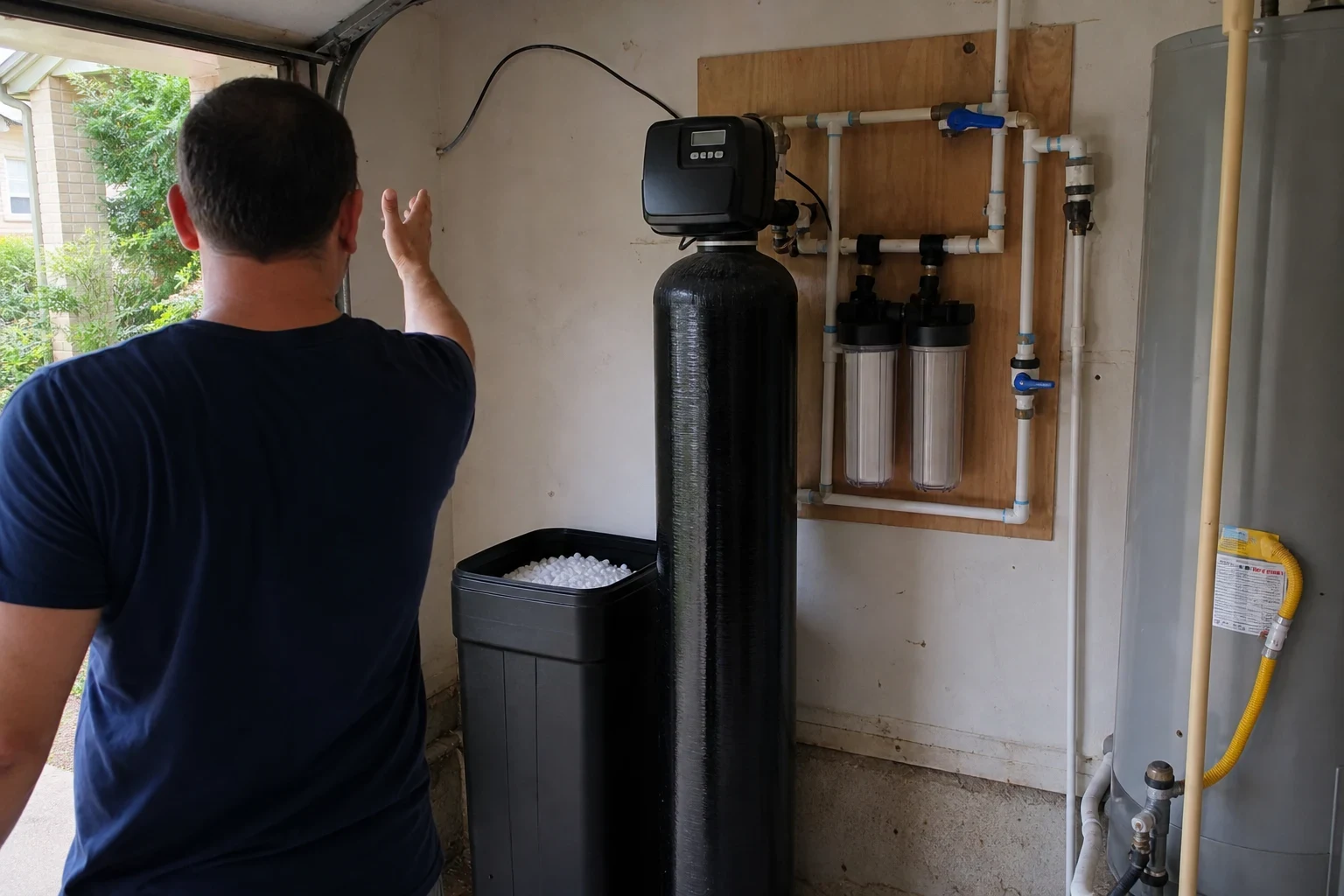
What a whole-home system does for you
Treated city water carries a disinfectant all the way to your faucet. That is by design, and it is also the thing most people notice: a faint bleach note in a glass, a pool smell rising from a hot shower. A whole-home filter sits on the main line and strips it out before water branches off to the rest of the house, so the kitchen sink, the upstairs bath and the ice maker all share one treated supply.
This is the right call when the complaint is taste, odor or fine sediment in every room. It is not a softener, and it is not a substitute for a reverse osmosis faucet if you want a dedicated drinking-water stage. We test first so the recommendation follows what is actually in your water, then explain where each option fits.
What the work includes
- Readings from your own tap
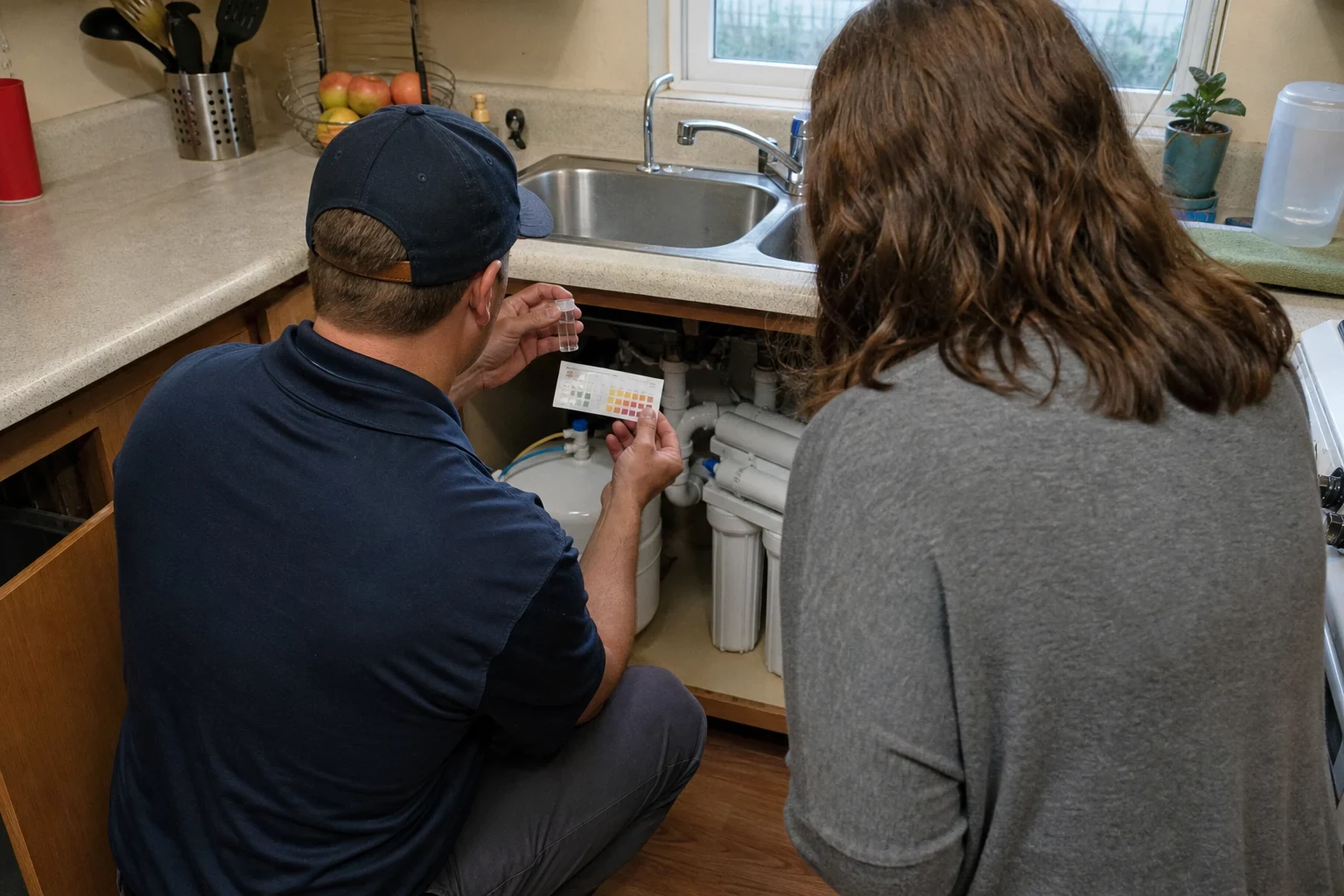
- Your system is chosen from a test taken at your faucet, not from a sales sheet. We go over the results with you in a short written water report before anything is recommended.
- Media matched to your supply
- Many treatment plants disinfect with chloramine, which plain carbon handles slowly. Where that applies, we specify catalytic carbon, which is made to break it down.
- Sizing for your flow
- We note how many bathrooms you have and when the house draws the most water, which is usually early morning. An undersized tank lets pressure sag when two showers run together.
- Sediment pre-filter
- A cartridge ahead of the carbon catches grit and protects the media, which helps it last its full service life.
- Bypass and shutoff valves
- A bypass loop keeps water flowing to the house during a filter change or service visit. It is a small detail that makes ownership easier for years.
- A tidy finished install
- Lines are run straight, supported and labeled, with the unit placed out of the way but within reach. Standard professional installation included for qualifying homes.
Signs your home would benefit
Bleach smell in the shower
Heat releases chlorine from water, so a hot shower is often where you notice it first. Filtering at the main line takes it out of every bathroom at once.
Water tastes off at every tap
If a pitcher filter fixes the kitchen but the bathroom sink still tastes like a pool, the issue is house-wide.
Grit in aerators and screens
Fine sediment collects in faucet aerators, showerheads and appliance inlet screens. A pre-filter stops it upstream.
Filters scattered around the house
Separate filters on the fridge, the shower and the kitchen faucet add up, and each runs on its own replacement schedule. One system on the main line simplifies that.
Dry feel after bathing
Some people find chlorinated water leaves skin and hair feeling dry. Removing it at the source is a reasonable step if that bothers you.
What moves the price
Every home gets its own quote, by phone or after the test, with the system, media and labor listed on separate lines. The total depends mostly on how much water your household moves and how much plumbing it takes to put the unit in the right spot. We walk you through each line so nothing turns up later as a surprise.
Tank size and flow rate
A larger home with more bathrooms needs more media and a bigger tank to hold pressure during busy mornings.
Standard or catalytic media
Catalytic media, made for chloramine, is priced above ordinary activated carbon. We specify it only when your supply needs it.
Access to the main line
An open spot in the garage is straightforward. A line tucked inside a wall or close to the slab takes more time and fittings to reach cleanly.
Pipe material and add-ons
Copper, PEX and CPVC each join differently. Pairing the filter with a softener or a UV unit, if your test supports one, changes the layout and the parts list.
How the job runs
- 1
A conversation by phone
You tell us what you notice and how many people live in the house. We set a time for the water test that suits your day.
- 2
Test and recommendation
We test at your tap, find where your main line enters and look at the space around it. You get a clear recommendation and a written quote before any work is scheduled.
- 3
Installation day
We lay down floor protection, shut off the water and cut into the main line with the bypass in place. In much of Arlington the line comes up near the garage or an exterior wall, so we plan placement to keep the unit out of direct sun and protected for the hard freezes that do come through. Most installs are finished within the day.
- 4
Flush, check and walk-through
We flush the new media, check every joint for leaks and confirm pressure at the far fixtures. Then we show you the bypass, the pre-filter and when each part needs changing, and leave the area clean.
Common questions about whole-home filters
Will my water pressure drop once the filter is in?
A properly sized system should not cause that. When pressure does fall off, the usual cause is a tank that is too small for the house or a pre-filter overdue for a change. We size for the hour your home uses the most water and check flow at the most distant fixture before we leave.
Will it handle chloramine, or just chlorine?
Ordinary carbon takes out chlorine easily but is slow against chloramine. Catalytic carbon is built for chloramine, so we suggest it when your water supplier disinfects with it.
How much maintenance does the filter need?
Expect to swap the sediment pre-filter every few months, sooner if your water carries a lot of grit. The carbon media holds up far longer, often for years, based on the tank size and how much water the house uses. At the walk-through we hand you a schedule for your own system.
Does a whole-home filter soften water too?
It does not. Carbon works on taste, odor and fine sediment, but calcium and magnesium flow right past it, so spots on glass and scale on fixtures will not change. When your test shows hardness high enough to treat, we can go over our water softeners as a separate option.
Should I add reverse osmosis for drinking water as well?
Plenty of homes are satisfied with whole-home carbon by itself. For a further stage on the water you drink and cook with, an under-sink reverse osmosis unit in the kitchen works well alongside it. We will give you a straight answer on whether your water would gain anything from it.
Find out what your water needs
A short call is enough to set up a test at your tap. You will see your readings and a clear quote before anything is installed.