ServicesWater Softeners
Water Softener Installation in Arlington
We measure the hardness at your tap, then size and fit a softener that matches it. You get fewer spots on glass and fixtures, gentler water on your heater and appliances, and a neat installation you will barely notice once it is running.
A Softener Is Worth It When the Numbers Say So
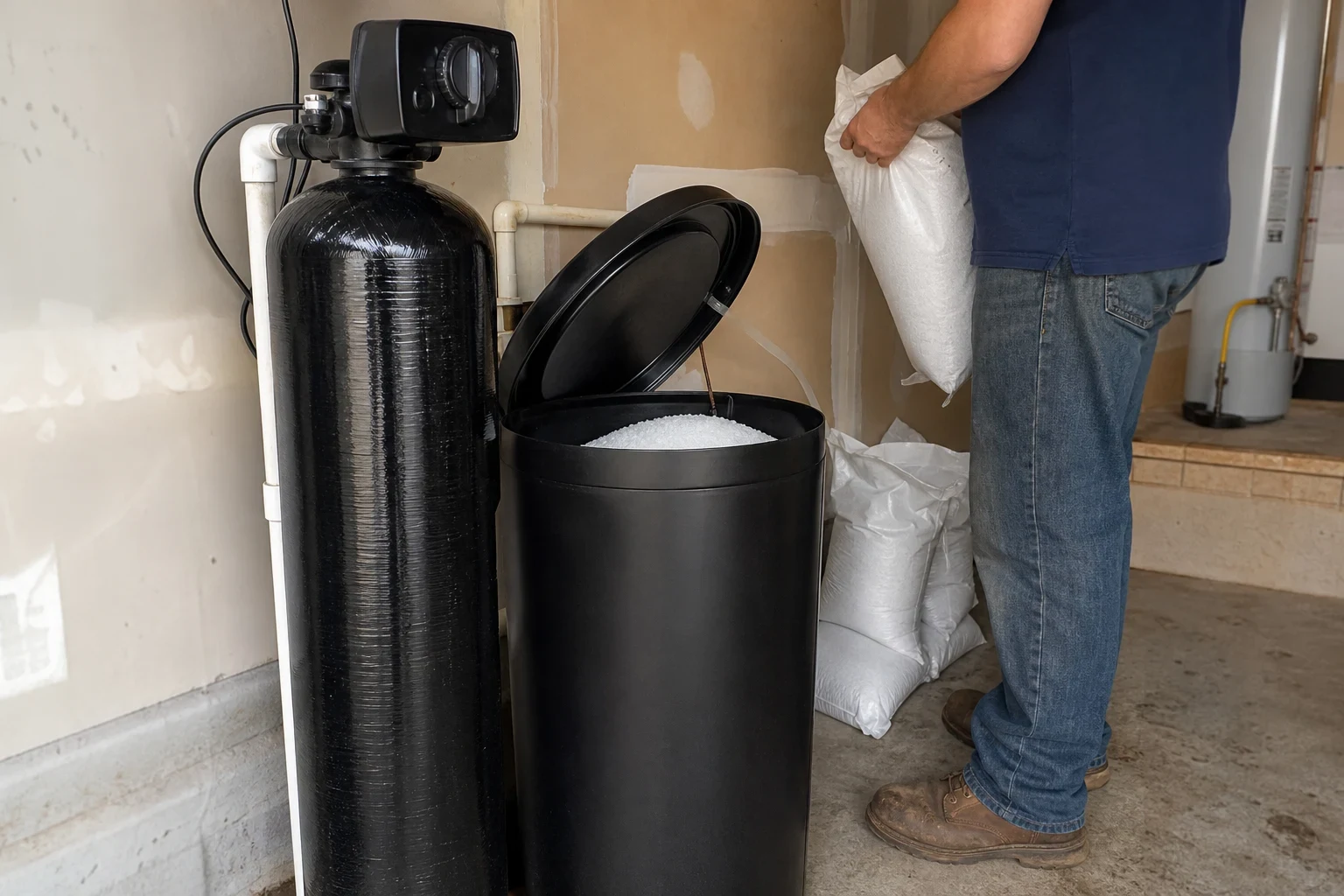
Hard water holds dissolved calcium and magnesium. When that water is heated or left to dry on a surface, the minerals come out as scale, so the first places you notice it are tank water heaters, showerheads and the small screens inside your faucets. Inside a softener, a tank of resin beads trades those hardness minerals for sodium, and a periodic brine rinse recharges the beads so they keep doing the job.
Not every house needs one, and we would rather tell you that up front. We start with a reading of your water and look at what you are actually seeing at the sink and in the shower. If the hardness is mild, a softener may not be the right spend, and we will say so. If taste or chlorine odor is the real complaint, whole-home filtration or reverse osmosis may serve you better.
When a softener does make sense, we size it to your hardness and your household's daily use, so it regenerates often enough to stay effective without wasting salt or water.
What Your Softener Installation Covers
- Hardness reading and sizing
- We measure your water and ask how many people live in the house and how you use water day to day. That sets the resin capacity, so the unit is neither undersized nor oversized.
- Placement near the main line
- Many homes around Arlington sit on slab foundations with the main line entering at the garage or an outside wall. We pick a spot with level footing, room to add salt and a clear path for the drain line.
- Bypass valve
- Every installation includes a bypass, so water keeps flowing to the house if the softener ever needs service. We show you how to use it before we leave.
- Drain and overflow lines
- Regeneration rinse water needs a proper drain with an air gap. We route it cleanly and secure it, with no loose tubing across the floor.
- Programming and handoff
- We set the regeneration schedule to your reading and usage, fill the brine tank, and walk you through salt type and how often to check it.
Signs Hard Water Is Working Against Your Home
Spots that will not rinse off
White, chalky marks on glassware, shower doors and dark faucets that come back days after cleaning are mineral deposits, not soap.
Crust on showerheads and aerators
Clogged spray holes and a gritty ring inside the aerator mean scale is building wherever water sits and dries.
A water heater that pops or rumbles
Sediment settles at the bottom of a tank heater and crackles as it heats. Scale on the elements makes the heater work harder for the same hot water.
Stiff laundry and dull skin
Hard water binds with soap, so towels come out scratchy and you may need more detergent and shampoo to get a lather.
Soap film in tubs and sinks
A gray ring that needs scrubbing rather than wiping is soap that reacted with minerals instead of rinsing away.
What Sets the Cost of a Softener
The cost depends mainly on how hard your water tests, how much your household uses each day and how easy the main line is to reach. Standard professional installation included for qualifying homes. We review each item on your quote with you, once on the phone and again at your home.
Water hardness and number of people
Harder water and a bigger household call for more resin. A unit sized correctly runs more up front than an undersized one, yet it needs to regenerate less often.
Where the main line sits
If your garage already has a softener loop, the job stays simple. If it does not, new pipe has to be run to a good location, which takes more time and materials.
Reaching a drain and an outlet
The control valve has to plug in, and the rinse water has to reach a drain. When either one is a distance from where the softener will stand, routing to it becomes part of the work.
Adding filtration
In some homes a carbon filter in front of the softener makes sense. Putting both in at once generally costs less than booking two visits.
How a Softener Installation Runs
- 1
Your water test
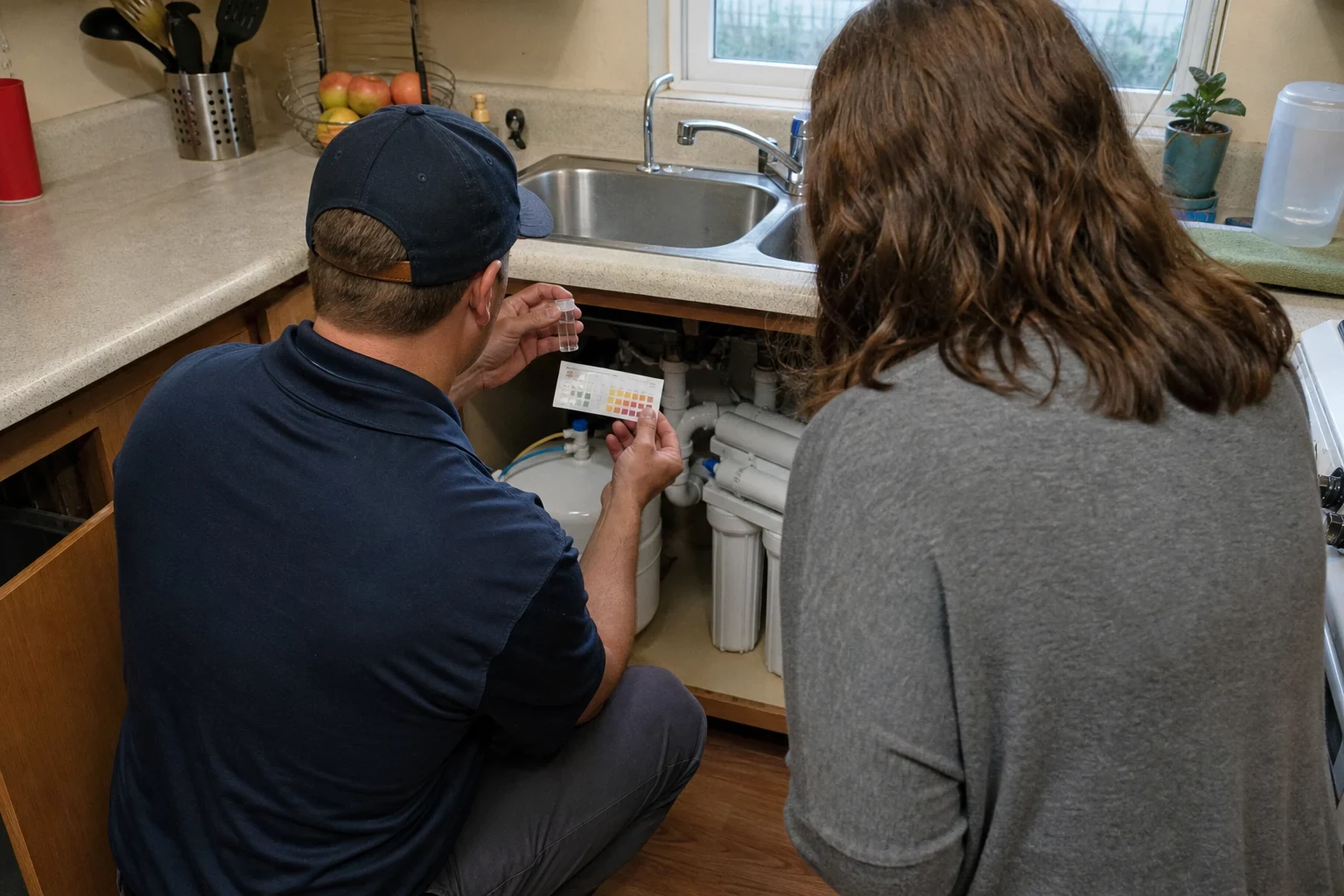
We take a hardness reading in your home and talk through what you are noticing. You also get a written water report from that visit, so you see the numbers before any recommendation.
- 2
A clear plan and quote
We explain the unit size, where it will go and what the plumbing connection involves. You get the full scope before anything is scheduled.
- 3
Installation day
We shut off the water, protect the floor, cut into the main line and fit the bypass, softener, brine tank and drain. Most installations take part of a day, and we check every joint for leaks before turning the house back on.
- 4
Startup and cleanup
We program the valve, run a first regeneration, test the softened water and clear away packaging and offcuts. You are shown the bypass and the salt routine before we go.
Water Softener Questions We Hear Often
Do I really need a softener, or will a filter do?
It depends on what your test shows and what bothers you. Softeners deal with scale and spotting; they do not remove chlorine taste. If taste is the issue, whole-home filtration may be the better fit, and we will tell you which one your reading supports.
Will softened water taste salty?
At ordinary hardness levels, most people cannot taste a difference. The softener exchanges minerals for a small amount of sodium, not table salt in the glass. If you prefer, a reverse osmosis faucet at the kitchen sink gives you drinking water with very little sodium.
How often will I need to add salt?
That depends on your hardness and how much water you use. Most households check the brine tank every few weeks and top it up when it drops below half. We set the schedule so the unit is not burning salt it does not need.
Can the softener go in a hot garage?
Yes, garages are the most common spot here. Summer humidity can cause salt to harden into a crust in the brine tank, so we show you how to spot it and recommend a salt that resists it.
What if my home has no softener loop?
We can tie into the main line where it enters the house. We look at the run, the drain and the outlet during the water test and explain exactly what the connection involves before you decide.
See Your Hardness Before You Decide
A short visit gives you a reading of your water and an honest view of whether a softener belongs in your home. If it does, we will plan the size and placement with you.