Arlington, TX
Arlington Water Filtration, Fitted Cleanly Into Your Home
We install whole-home filtration, water softeners, reverse osmosis and UV water treatment in Arlington homes, with regular work in Grand Prairie and Mansfield. Every plan starts with a test at your kitchen tap. We walk you through the readings in plain language, then suggest the one or two systems that suit what we found.
- Water test before recommendations
- Subcontracted master-licensed plumbers install
- 1-year installation workmanship warranty
- Installation included, qualifying homes
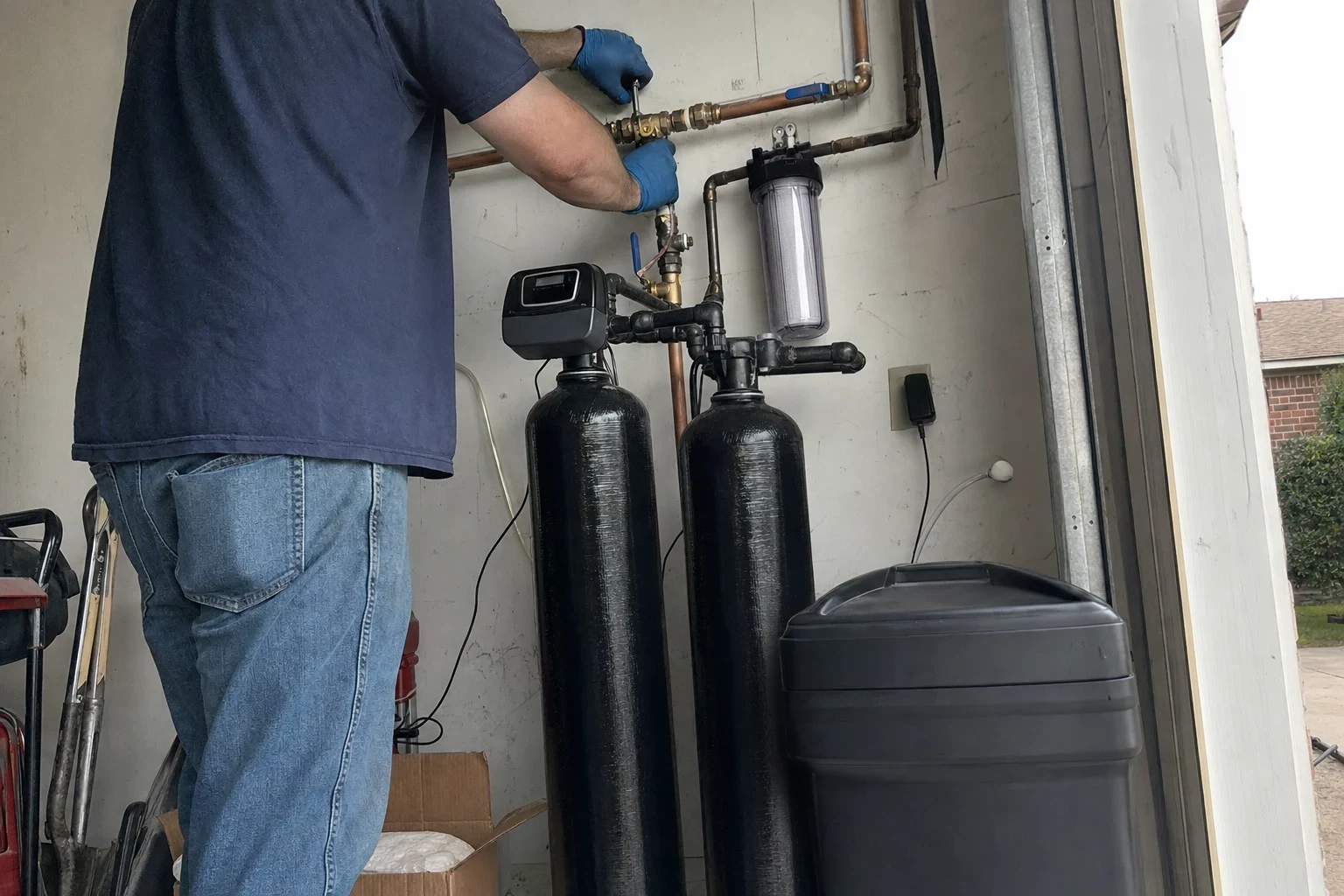
Four Systems, Chosen to Fit Your Water
Few houses need all four of these. Whole-home filtration treats water as it enters your plumbing, a water softener deals with mineral scale, reverse osmosis supplies a separate faucet for drinking and cooking, and UV water treatment adds a disinfection stage. Each has its own page, and a short phone conversation usually narrows things down to the one worth a closer look.
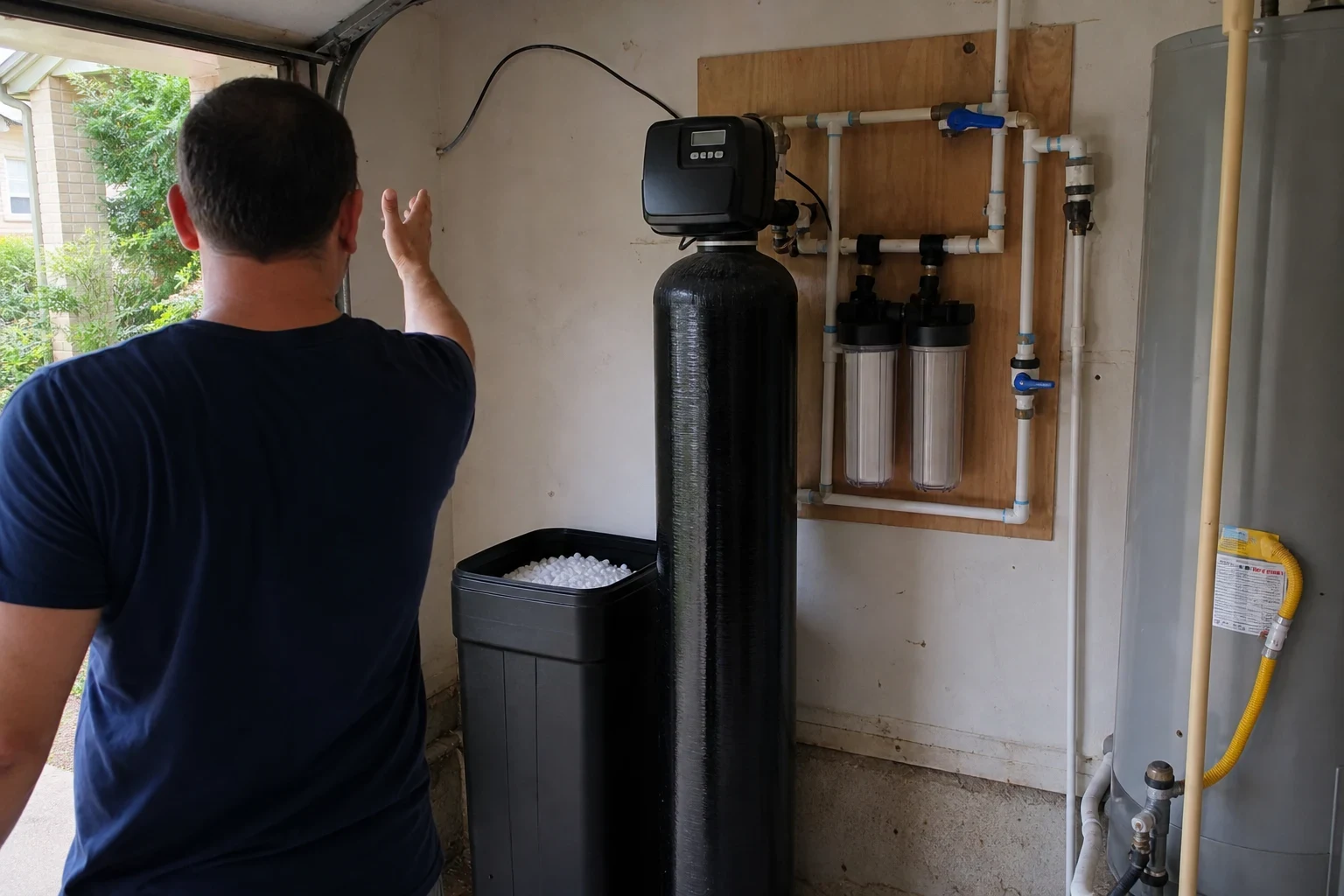
Whole-Home Filtration
A carbon system on your main line that treats every tap and shower, sized to your household and placed where it is easy to service.
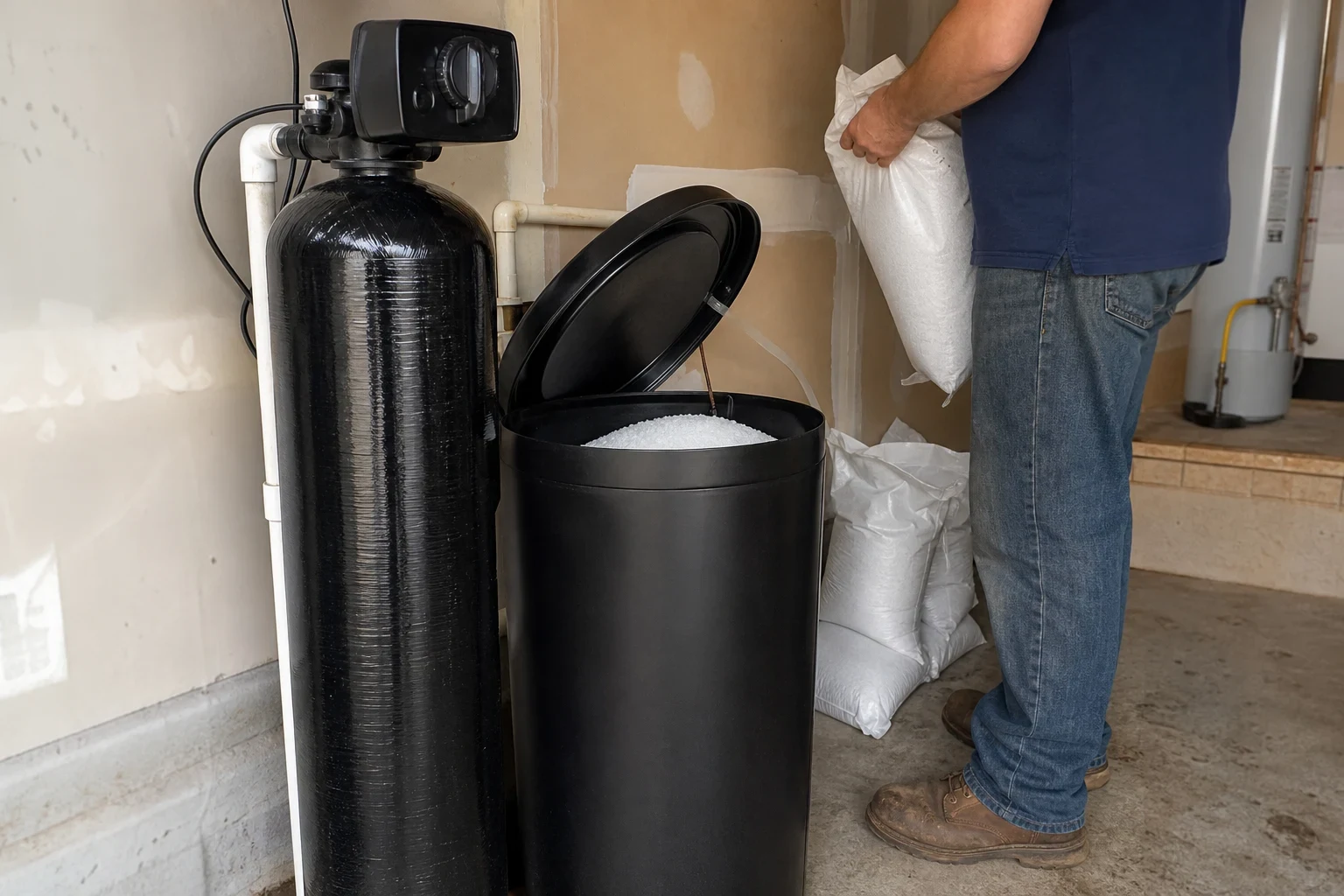
Water Softeners
Softeners sized from your own hardness reading, set where they are easy to service, and programmed so they regenerate only as often as your household needs.
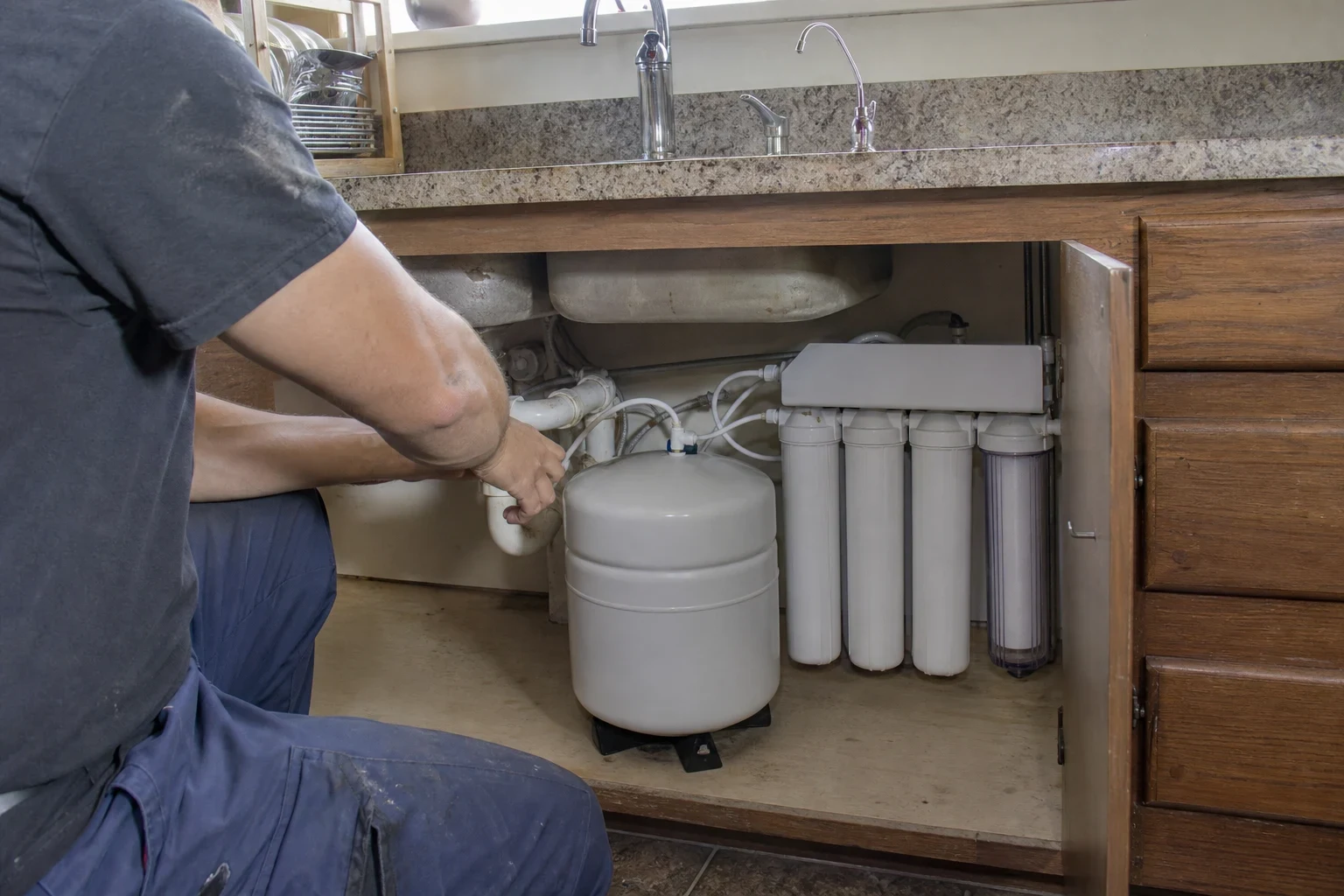
Reverse Osmosis
An under-sink system that sends filtered drinking and cooking water to its own faucet, sized to your cabinet and fitted so it looks like it was always there.
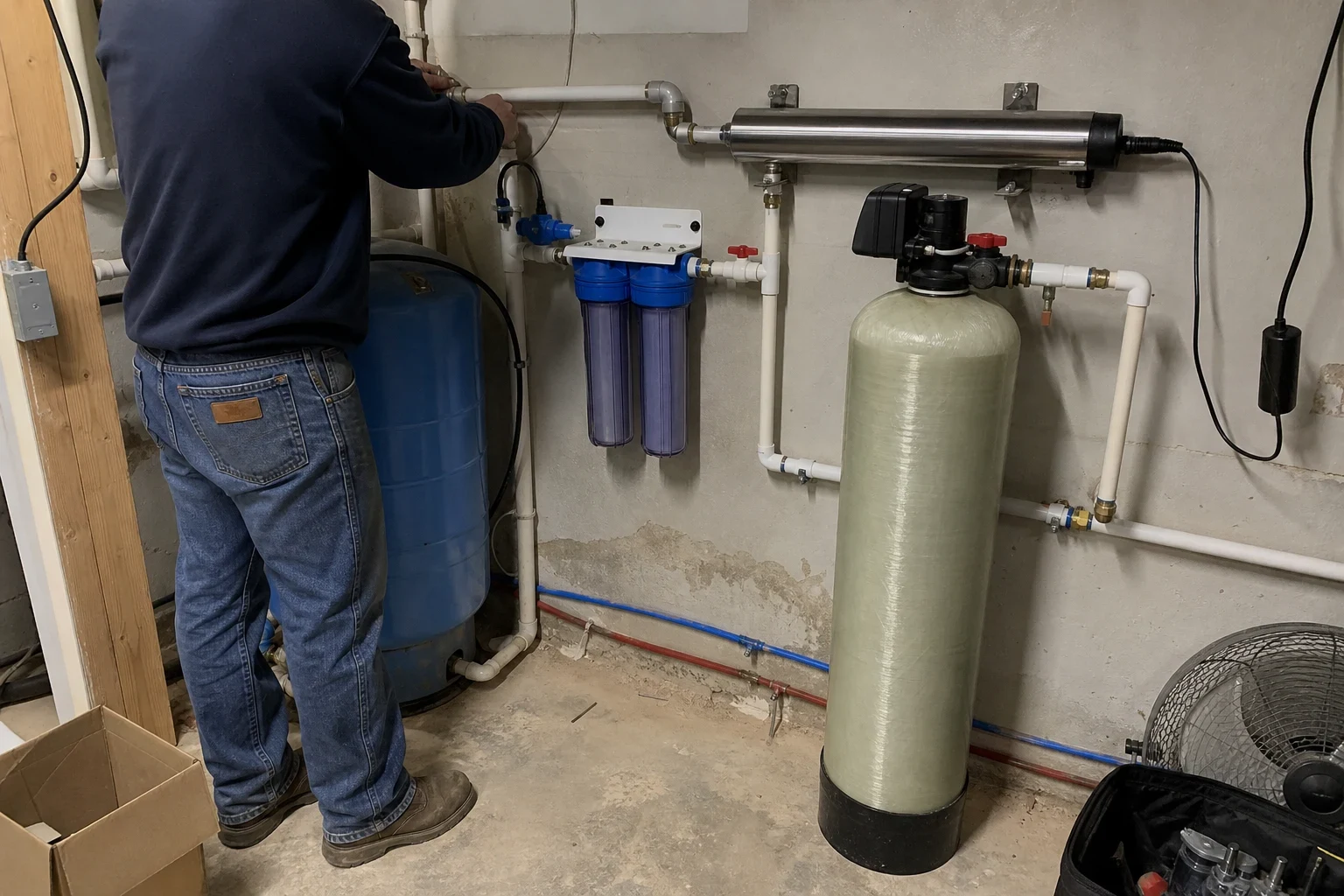
UV Water Treatment
A chemical-free disinfection step for the water entering your home, sized to your flow and fitted with the prefilter it needs to work properly.
How We Work in Your Home
The equipment matters, but so does where it goes, how it is plumbed and who stands behind it afterward. This is the part we take most seriously.
- 01
A water test comes first
Before any equipment comes up, we test the water at your tap and put the results in a written water report. The recommendation follows those readings, not a sales script.
- 02
Qualified hands on the main line
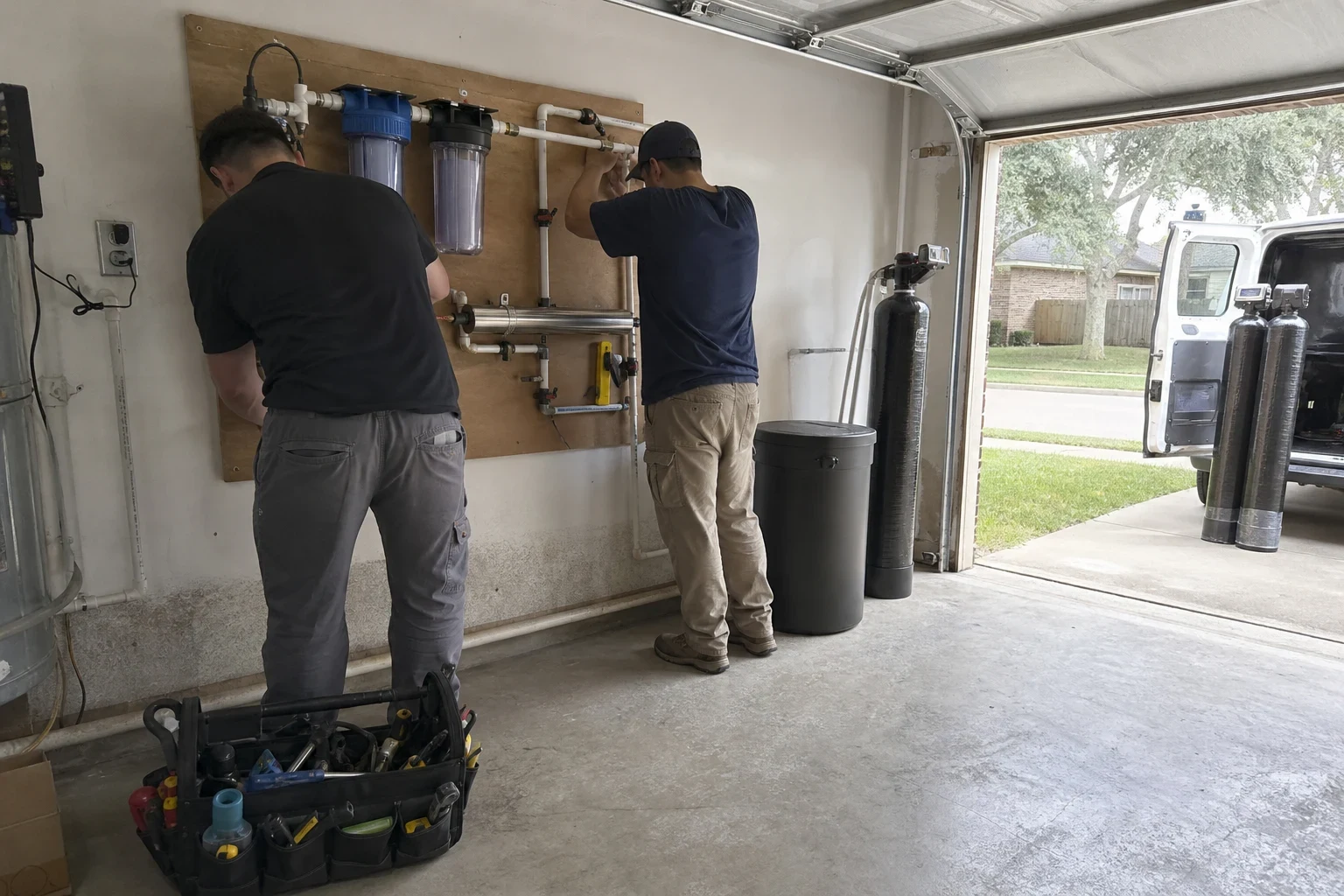
Installations are handled by subcontracted master-licensed plumbers. The connection to your main line is made by a tradesperson qualified for it, and the work follows local plumbing code.
- 03
A year of cover on the install
We back installation-related defects with a 1-year workmanship warranty. If a fitting we made weeps or a connection we set needs attention, we come back and make it right.
- 04
Planned around how your home is built
Many houses in the area sit on slab foundations, with the water heater in the garage and the main entering near the front. We plan the system location around that layout, so the equipment stays reachable for filter changes and the plumbing runs stay short and tidy.
- 05
A finish you will not mind looking at
We lay down protection on the way in, run lines square and secure, label the bypass valve and clear away every scrap of packaging. The garage or utility area should look cared for when we leave.
Where We Install
We work throughout Arlington and in the towns around it. That includes Grand Prairie, Mansfield, Kennedale, Forest Hill and Cedar Hill to the south and east, and Euless, Bedford, Hurst, Richland Hills and North Richland Hills to the north.
- Arlington
- Grand Prairie
- Mansfield
- Hurst
- Forest Hill
- Kennedale
- Richland Hills
- North Richland Hills
- Euless
- Cedar Hill
- Bedford
If your town is not listed, ask when you phone. The Service Areas page has more detail.
What Shapes the Price of a System
Two neighbors on the same street can end up with very different quotes. The difference usually comes from what the water test shows and how your home is plumbed. Here is what moves the number, so nothing in your quote comes as a surprise.
After your water test, we walk through the options and give you a quote by phone, with each part of the job listed. Standard professional installation included for qualifying homes.
- The type and size of system
- A compact reverse osmosis unit under the kitchen counter involves less piping and labor than equipment that treats the whole house. For whole-home filters and softeners, the number of bathrooms and people decides how much capacity the system needs.
- Where the equipment can go
- An open garage wall near the main line is the simplest case. If the system has to sit farther away, in a tight closet or outdoors, the extra piping, cabinet work or weather protection adds to the job.
- The plumbing it connects to
- Copper, PEX and older galvanized lines each take different fittings. Corroded or undersized pipe at the connection point may need replacing before a new system goes on.
- Drain and power needs
- Softeners and reverse osmosis units need a drain for flushing, and UV systems need a nearby outlet. When neither is close, running one is part of the work.
- Permits and inspection
- Some installs, particularly those tied into the main line, call for a plumbing permit. When one is required, it is included in the plan and the quote rather than added later.
- Ongoing filters and media
- Cartridges, membranes and UV lamps all have a replacement schedule. We tell you what each costs to keep running before you choose, not after.
From First Call to Clean Water
A typical job follows four steps. You will know what is happening at each one.
- 1
A conversation and a test
You tell us what bothers you about your water, whether that is taste, spotting on glass or a smell from the shower. We arrange a visit to test the water at your tap.
- 2
Results you can read
We go over your water report in plain terms and point out what is worth treating and what is not. If a softener or UV system does not make sense for your home, we say so.
- 3
Installation day
The plumber shuts off the water, fits the system with a bypass valve, connects any drain or power it needs and checks every joint for leaks. Floors and walls stay protected throughout.
- 4
A walkthrough before we go
We show you the bypass, explain the filter or salt schedule and leave the area tidy. You know exactly how to look after the system from day one.
A Local Water Filtration Company
Water Filtration Arlington installs filtration and treatment equipment in homes across Arlington, TX and the surrounding towns. We keep the work focused on four system types and do them carefully, from the first test to the last fitting.
Our approach is quiet and considered. We would rather fit one system well than sell you two you do not need. Clean pipe runs, equipment you can reach for maintenance and a clear explanation of how it all works are what we aim to leave behind.
- License
- Installations handled by subcontracted master-licensed plumbers
- Warranty
- 1-year workmanship warranty on installation-related defects
What Arlington Homeowners Ask Us
City water already meets the standards. What is the point of filtering it?
Local city water is treated to drinking water standards, and we will not claim it is not. Most people filter to remove the taste and smell of disinfectant, to cut down on scale and spots, or to add another treatment step for the water they drink. Your test tells us which of these matters in your home, if any.
Is a water softener something I need?
Maybe not. Hardness differs from home to home, and a softener is only worth it when your test finds enough minerals to leave scale on fixtures, glass and the water heater. With a low reading, we will steer you to filtration.
How does the water test work?
We take a sample at your tap, then send you a written water report that walks through every reading. It is a step in planning your system, and our recommendation is based on that report.
Is the work covered once it is finished?
Yes. Each installation comes with a 1-year workmanship warranty on installation-related defects. If a soldered joint of ours begins to drip or a fitting we tightened loosens in the twelve months after the job, give us a call and we will send someone out to repair it.
What is installation day like?
The water goes off only for the time the plumber needs to make the connections. Nearly all the work takes place in the garage or utility area, floors are kept covered, and we tidy up before leaving.
What keeps the equipment safe in a hard freeze?
When we can, we put systems indoors or in the garage. If one has to go outside, insulation and a cover for winter cold snaps are planned into the installation.
What maintenance does a system take?
That varies by system. Whole-home filters and RO units need cartridges or membranes changed now and then, softeners need salt, and UV lamps get replaced on a set schedule. At the walkthrough we give you the timing and a list of parts.
Start With What Is in Your Water
A short phone call gets your water test arranged and your questions answered. From there, you decide whether a system is worth it.