ServicesUV Water Treatment
UV Water Treatment in Arlington
UV water treatment adds a chemical-free disinfection step to the water entering your home. We size the unit to your flow and fit it after proper prefiltration. Then we explain plainly what UV does and does not handle, so you pay only for protection you actually need.
What UV treatment does, and when it fits
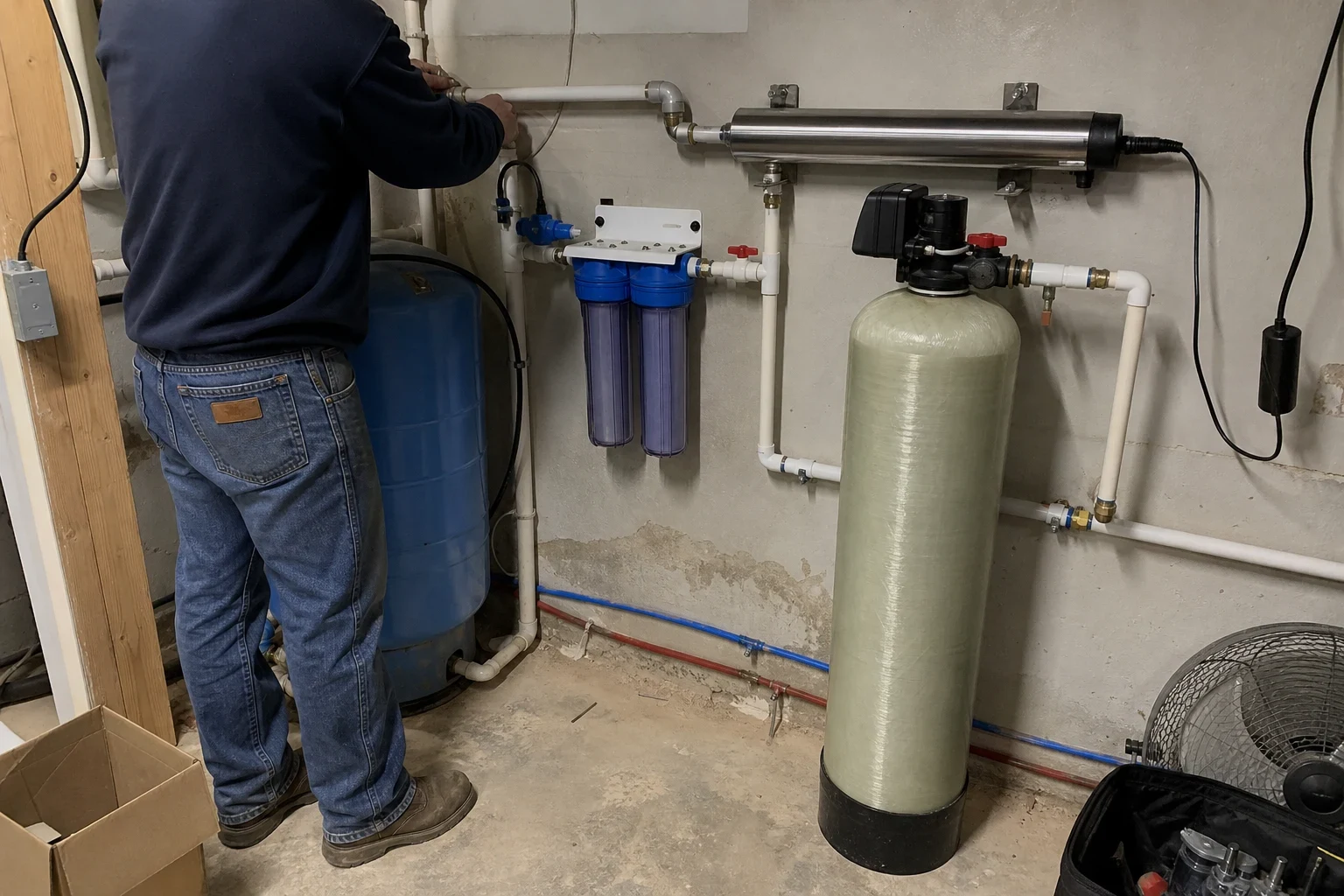
A UV system routes your water through a stainless steel chamber, where an ultraviolet lamp inside a quartz sleeve shines on it as it passes. That light damages the DNA of bacteria, viruses and cysts, leaving them unable to multiply. No chemical goes in, and the water keeps the same taste, odor and mineral content it had before.
City water already arrives disinfected, so for most homes UV is an added layer rather than a necessity. It makes sense when someone in the house has a weakened immune system, when there is a newborn, or when the boil-water notices that follow hard North Texas freezes left you uneasy. If your concern is chlorine taste, lead from old plumbing or scale on fixtures, UV will not help. In that case we will point you toward whole-home filtration, reverse osmosis or a water softener instead.
We would rather tell you UV is unnecessary than install one you never needed.
What a UV installation includes
A correctly sized chamber
We match the unit's rated flow to your home's peak demand, counting the showers and fixtures likely to run at once. An undersized chamber lets water move past the lamp too quickly for a full dose.
Sediment prefilter
UV only works on clear water. A cartridge filter ahead of the chamber catches grit and fine particles that could shade microbes from the light.
Placement at the main line
Slab foundations are the norm in this area, which typically brings the main line up in the garage or along an outside wall. We mount the unit where it treats every tap and leaves enough clearance to slide the lamp out for service.
Shutoff and bypass valves
Valves on both sides let you keep water flowing to the house while the lamp, sleeve or prefilter is changed.
Controller and alarm
The controller plugs into a nearby outlet and gives a warning if the bulb stops working or comes due for a swap. Before leaving, we walk you through what each light and tone means.
A tidy finish
Lines are run square and strapped, cut pipe is deburred, and the work area is wiped down before we leave.
Signs UV treatment is worth a look
- Someone vulnerable lives with you
- Newborns, transplant patients and people in chemotherapy are more sensitive to waterborne microbes. A second disinfection step inside your home can be a sensible precaution, ideally discussed with their doctor.
- Boil notices leave you uneasy
- Main breaks and pressure drops can prompt a boil-water notice. As long as it has power, a UV unit keeps treating water as it comes into the house.
- Lines that sit idle for weeks
- Guest suites, rarely used bathrooms and homes left empty during long trips give bacteria time to settle. UV treats water at the point of entry, before it reaches those quiet runs.
- You already filter and want the last step
- If you have whole-home filtration or plan to add it, UV slots in right after. The filter clears the water, and the lamp handles what a filter cannot.
- A musty smell from one fixture only
- This usually points to a drain or water heater rather than the supply. We check that first, because a UV lamp cannot fix a problem downstream of it.
How a UV job runs
- 1
A conversation by phone
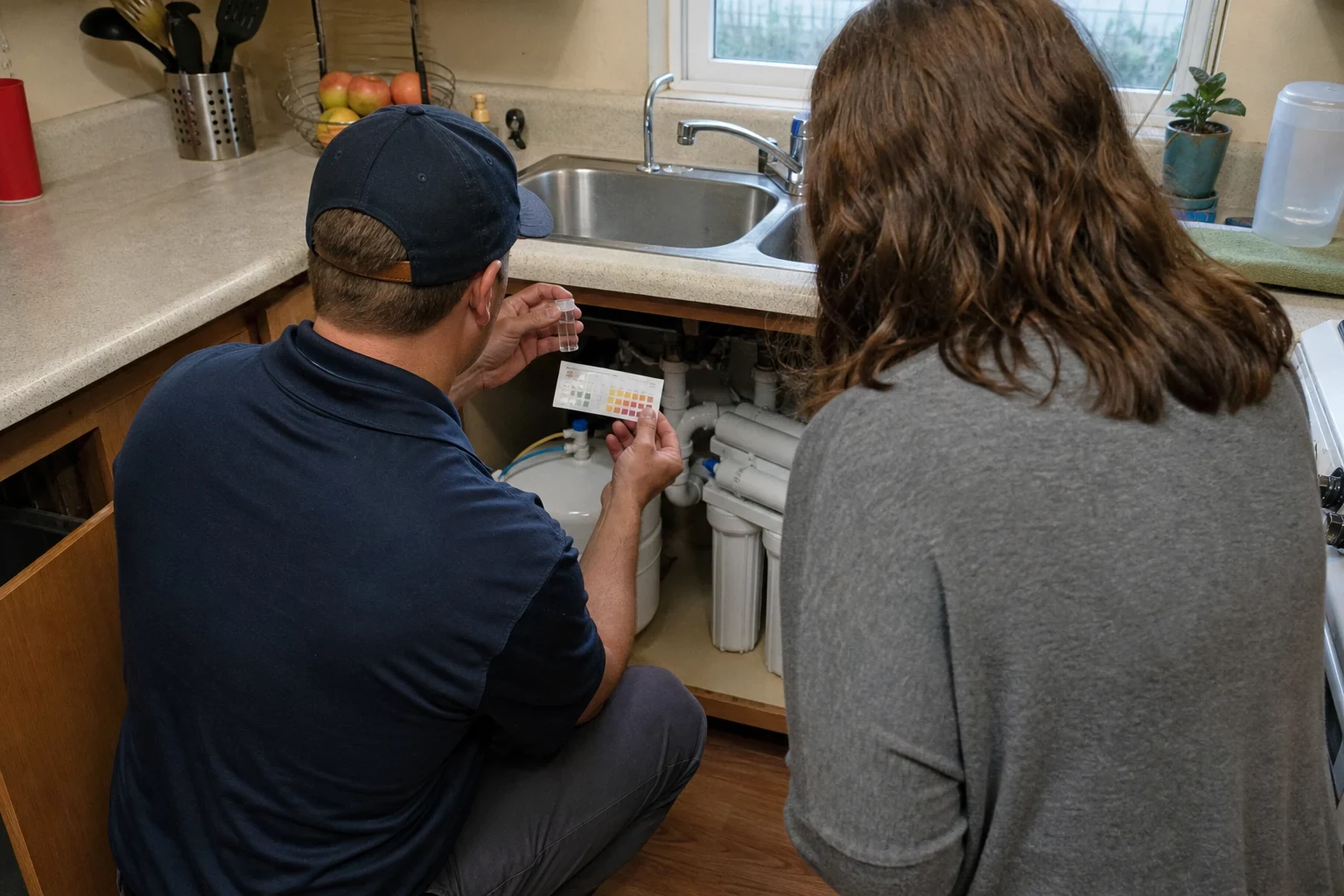
You tell us who lives in your home and what concerns you. We explain how our water test works and talk honestly about whether UV belongs in the plan at all.
- 2
A look at your plumbing
We find where the main line enters, note the pipe material and size, and confirm there is an outlet within reach. You get a written quote that lists the unit, prefilter and labor separately.
- 3
Installation day
Water is off for a short window while the plumber cuts in the valves, prefilter and chamber. Floors and nearby shelving are covered first. The new lines are flushed and disinfected before the system goes into service.
- 4
Walkthrough and upkeep
We show you the alarm, the bypass and how to swap the prefilter cartridge. The lamp is typically replaced about once a year, and the quartz sleeve gets a gentle cleaning at the same time.
What shapes the price of a UV system
We price UV after seeing your plumbing and hearing how your household uses water. Every component appears as its own entry on the quote, which lets you weigh each part before you commit. Standard professional installation included for qualifying homes.
- Your home's peak demand
- More bathrooms and more people drawing water at the same moment call for a larger chamber and a higher-output lamp. A compact house with one or two baths can get by with a smaller unit.
- Prefiltration
- Clear water may need a single sediment cartridge. Water carrying more particles calls for additional stages so the lamp can do its job.
- Pipe and placement
- Copper and PEX are handled differently, and a crowded garage wall may mean rerouting a section of line. If no outlet is close by, adding one is extra work.
- Pairing with other equipment
- Installing UV alongside whole-home filtration on the same visit shares labor and keeps the equipment in one neat run.
- Ongoing parts
- Plan for a yearly lamp, periodic prefilter cartridges and an occasional sleeve. We list these on the quote so nothing comes as a surprise later.
UV water treatment questions
- Will UV remove chlorine or make my water taste better?
- No. UV disinfects but leaves chemistry alone, so chlorine, minerals and any lead stay in the water. For taste, a carbon stage in whole-home filtration is the better tool, and reverse osmosis covers drinking water at the kitchen tap.
- Do I really need UV on city water?
- Usually not. Your utility disinfects before water reaches you, so UV is a precaution rather than a requirement. It earns its place for households with vulnerable members or for owners who want protection that keeps working inside the house during a boil notice.
- What happens if the power goes out?
- The lamp switches off, and water passing through is untreated until power returns. Some units need a minute to warm back up. If you are concerned during an outage, follow the same precautions you would during a boil notice.
- Will a hot summer garage affect the unit?
- The lamp runs constantly, so water sitting in the chamber warms slightly and your first draw after a quiet spell may feel tepid. We mount the unit away from the water heater flue and in the best-ventilated spot available, which keeps the electronics comfortable through the hottest months.
- How often does the lamp need changing?
- Roughly every twelve months, even if it still glows. Its ultraviolet output fades well before the visible light does, and the alarm will remind you when it is due.
- Can UV be combined with reverse osmosis or a softener?
- Yes. UV sits after any filtration or softening at the main line, while reverse osmosis serves one tap. If your water is hard, softening ahead of the lamp also keeps scale off the quartz sleeve.
Find out whether UV belongs in your home
Tell us about your household and your plumbing, and we will give you a straight answer on UV, including when it is not worth adding. If it fits, you will have a clear, itemized quote to consider at your own pace.