ServicesReverse Osmosis
Reverse Osmosis Drinking Water for Arlington Kitchens
A reverse osmosis system sits quietly under your kitchen sink and feeds a small dedicated faucet with water for drinking, coffee and cooking. We start with a water test, recommend a system that fits your cabinet, and install it with the same care you'd give your own kitchen.
What Reverse Osmosis Does at Your Tap
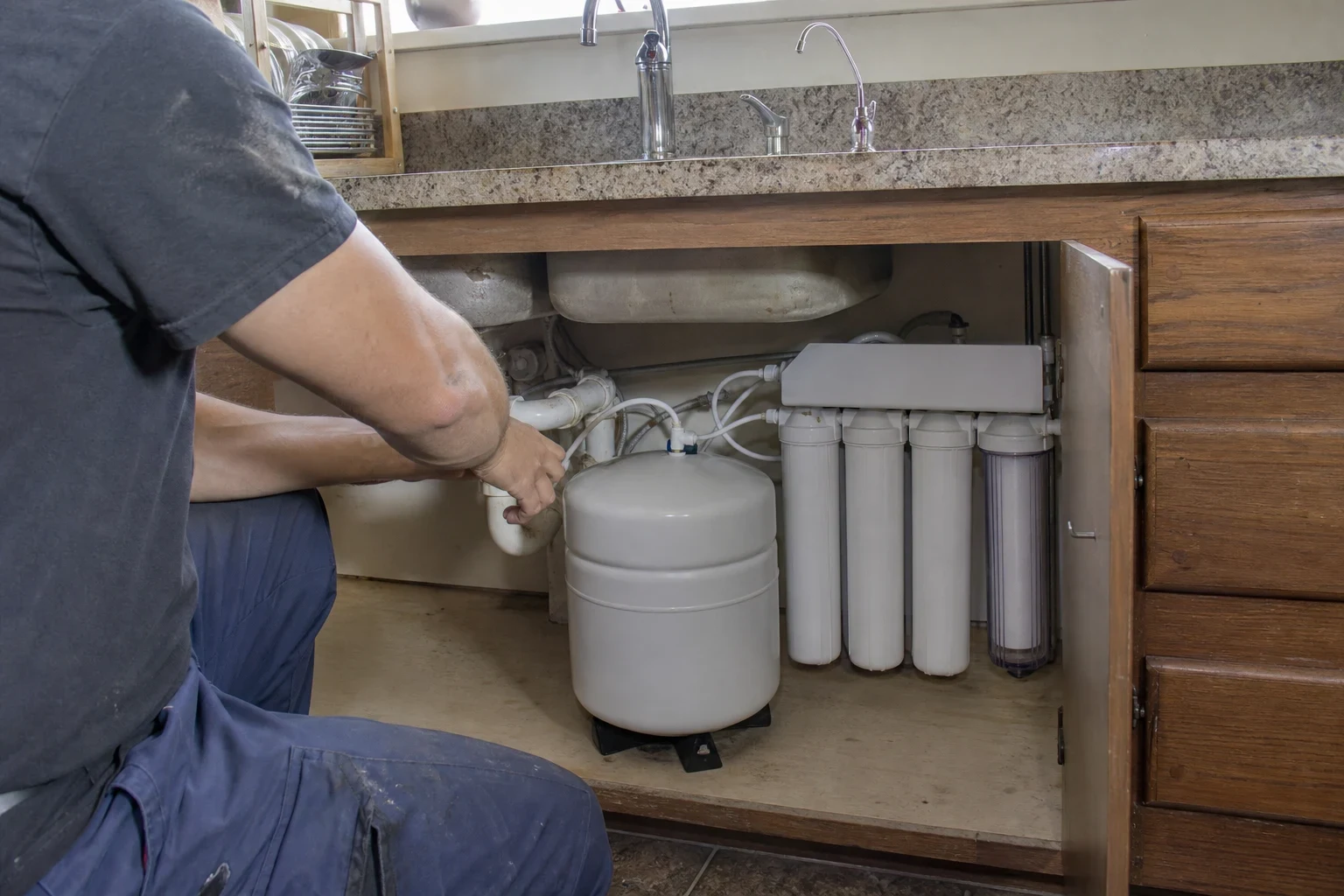
Inside the unit, your household water pressure forces water across a semipermeable membrane with openings far too small for most dissolved material to slip through. Minerals, metals such as lead picked up from older plumbing, and many of the compounds that shape taste stay on the other side and are rinsed away. Carbon stages before and after the membrane take out the chlorine-type flavor that city water carries, so the glass you pour tastes clean and neutral.
It is a point-of-use system, which means it treats the water you drink rather than the water in your shower or laundry. For many homes that is the right scale. If your concern is taste and odor throughout your home, whole-home filtration may suit you better, and the two often work well together.
Around Arlington, tap water runs noticeably warmer through the long summer, and that warmth makes the disinfectant taste easier to notice. A reverse osmosis faucet gives you water that tastes the same in August as it does in January.
What Your Installation Includes
Staged filter housings
A sediment prefilter, carbon prefilter, the membrane and a polishing carbon filter, mounted neatly to the cabinet wall so the floor of the cabinet stays usable.
A faucet chosen to match
We help you pick a faucet in a finish that sits comfortably beside your main fixture, whether that is brushed nickel, matte black or polished chrome. On stone or quartz counters we drill the hole with the right bit and take our time.
Storage tank or tankless unit
Depending on space and how much water you use, we fit a compact pressurized tank or a tankless unit that filters on demand.
Clean drain and supply connections
A proper drain saddle above the trap, a dedicated cold-water feed and tidy tubing runs, clipped and labeled so a future filter change is simple.
Optional refrigerator line
If you'd like filtered water at the fridge door and in the ice maker, we can run a line to it and tell you plainly if the route is practical.
When Reverse Osmosis Is Worth Considering
- Cases of bottled water in the pantry
- Hauling plastic jugs and cases home for drinking and coffee is often the clearest hint. Filtered water from a faucet beside your sink usually replaces that routine for good.
- Tap water tastes of chlorine
- That pool-like note is harmless at city levels, but it flattens coffee and tea. Carbon and membrane stages take it out.
- White film on kettles and glassware
- Spots and crust point to dissolved minerals. Reverse osmosis removes most of them from the water you cook and drink with.
- Your home has older plumbing
- Original fittings and older solder can add trace metals to standing water. A reverse osmosis system reduces lead at the tap you actually drink from.
- Cloudy ice and odd-tasting cubes
- Running a line to the ice maker clears up both.
How the Work Goes
- 1
A call and a water test
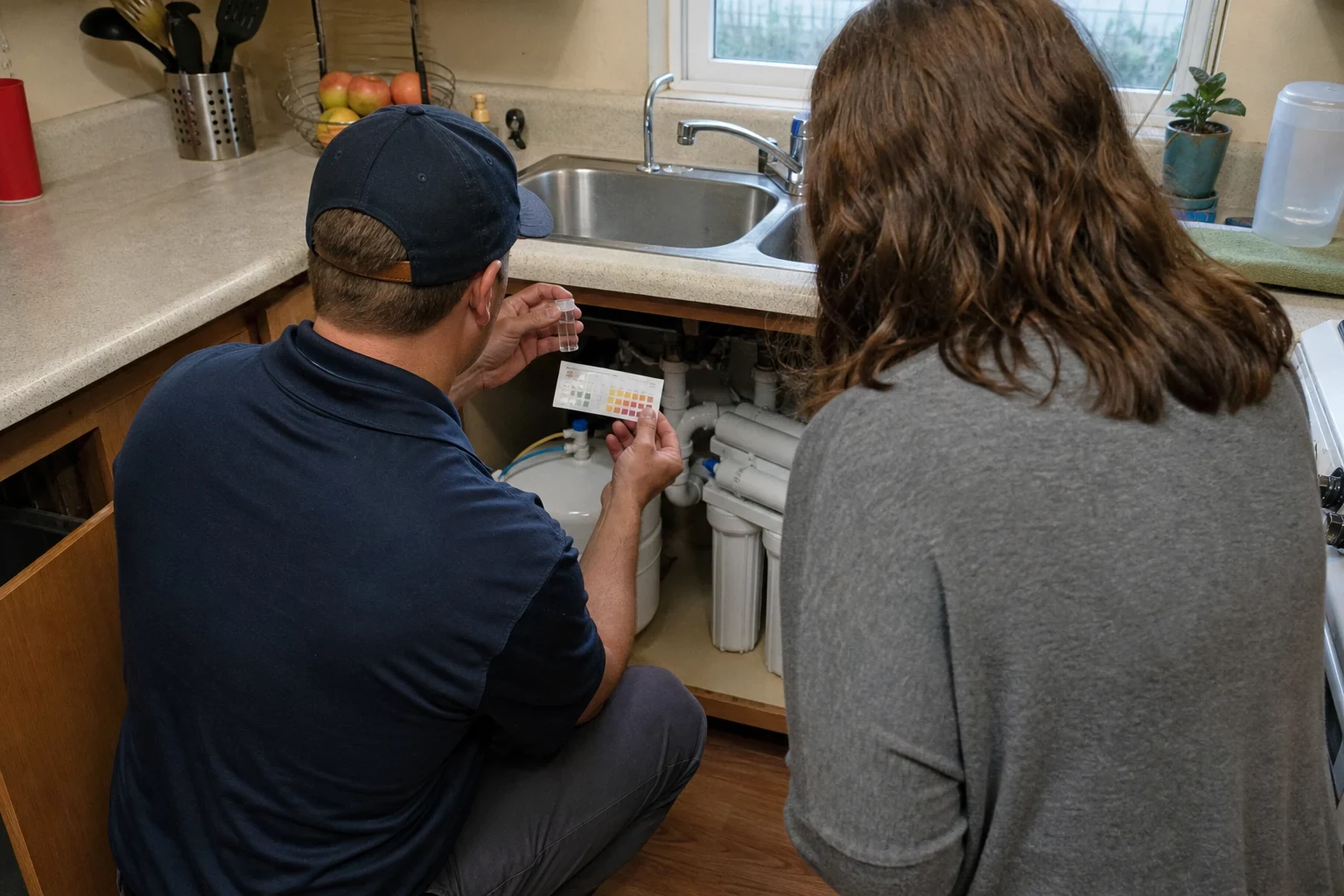
We talk through what's bothering you about your water and arrange a water test. You get a written water report so you can see what's in your tap water before any equipment is discussed.
- 2
A recommendation and a quote
We look under your sink, check water pressure and note what shares the cabinet, like a disposal or dishwasher line. Then we give you a quote by phone for one system that fits, with options explained.
- 3
Installation day
We lay down a mat and protect the counter, mount the housings, set the faucet and make every connection. Plan on the job filling a morning or an afternoon. Your kitchen tap is shut off only while we tie into the cold-water supply.
- 4
Flush, check and walk through
We flush the new filters, check each joint for drips, and show you how to change filters and when. We leave the cabinet clean and the old packaging gone.
What Sets the Cost
The cost of reverse osmosis comes down mainly to the unit you pick and the conditions under your sink. Standard professional installation included for qualifying homes. Any work past a standard install is listed in your quote before the job begins.
- With a tank or without
- A tankless unit has a higher price but leaves more room in the cabinet and filters as you draw water. A unit with a tank is more basic and suits most kitchens.
- What your counter is made of
- Granite, quartz and porcelain need a diamond bit and slow, careful drilling to keep the surface from chipping. On laminate, or where the sink has a spare sprayer hole, the faucet goes in far faster.
- Household pressure
- The membrane works only with enough pressure behind it. If your home runs low, we may add a small booster pump so the faucet flows steadily.
- Additional lines
- Running water to the fridge or to a second faucet means more tubing, more fittings and more labor.
- Shape of the shutoff valves
- Older kitchens often have original valves that are stiff or corroded. We will let you know and give you a price to replace them if that makes sense.
Reverse Osmosis Questions We Hear Often
- Does reverse osmosis waste water?
- Yes, some. The membrane rinses itself by sending a portion of water to the drain while it fills. Newer systems are far more efficient than older designs, and we'll tell you the ratio for any unit we recommend.
- Will it strip the minerals out of my drinking water?
- It takes out most dissolved minerals, which is a large part of why the water tastes so clean. Some people miss a little body in the glass. For them, an optional remineralizing cartridge returns a trace of calcium and magnesium for a rounder taste.
- How often do the filters need changing?
- Plan on new pre and post filters roughly once or twice a year, with the membrane lasting a few years, though your own water use sets the real pace. Before we leave, we write out a simple schedule and show you how each housing opens and seals.
- Is there room for a system if my sink has a disposal?
- In most kitchens there is. A slim tank or a tankless unit generally sits beside the disposal without crowding it or the dishwasher line. We measure the cabinet during our visit and only recommend a unit that fits the space you have.
- Do I also need a water softener?
- Not necessarily. Reverse osmosis handles the water you drink, while a softener treats scale throughout your home. We only suggest water softeners when the water test shows hardness worth treating.
Better Water From Your Own Kitchen Faucet
Tell us what you'd like to change about your drinking water. We'll test it, look at your sink, and explain the system we'd fit and why.